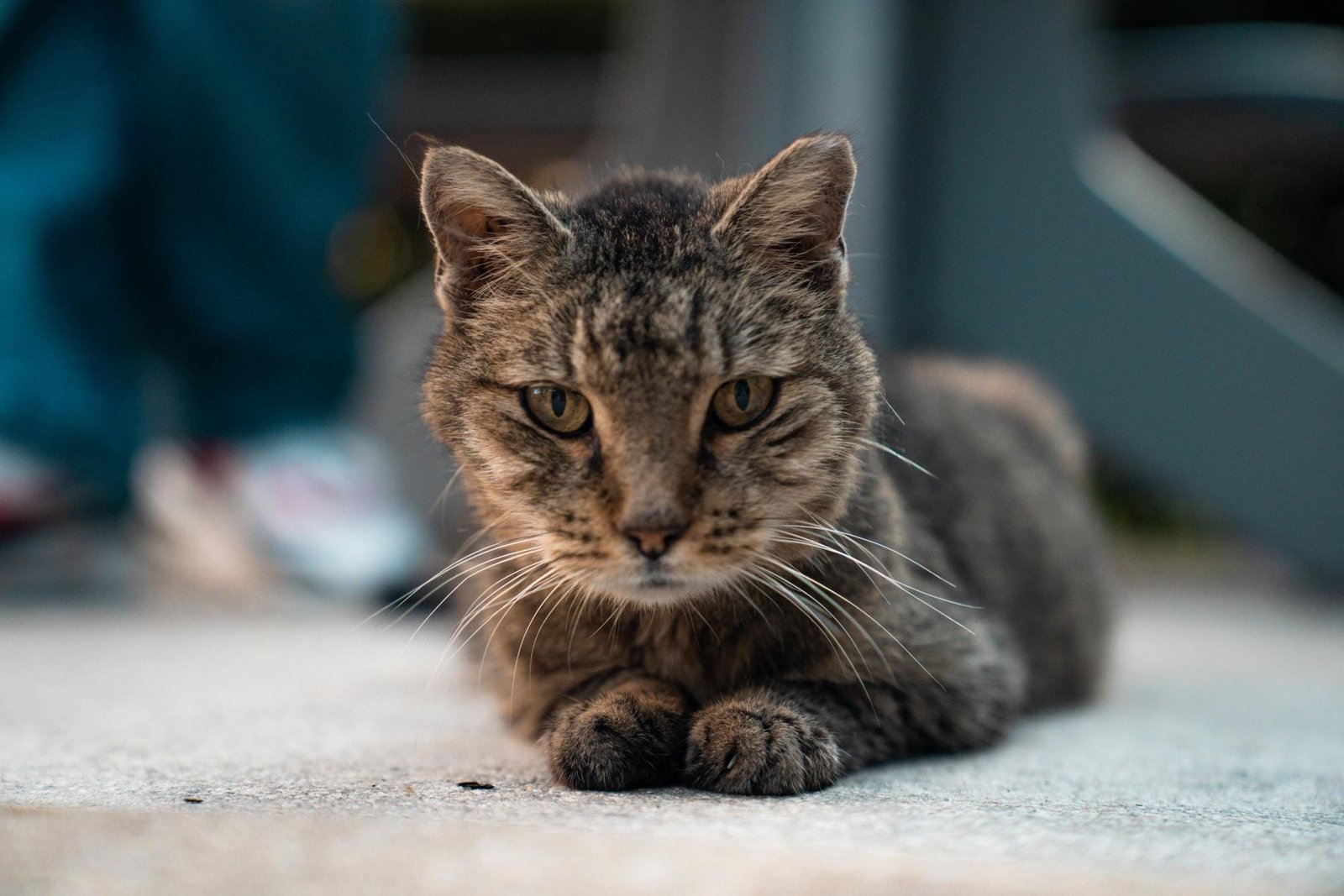
Underneath a staircase outside Florida Atlantic’s Breezeway Food Court on the Boca Raton campus, one can find an empty pet bed surrounded by toys and discarded cat-food packaging. But don’t panic, these items belong to a colony of campus cats, notably known as Krispy and Soup.
Some students noticed that these two cats seemed malnourished and decided to feed them, leaving food under the staircase where they call home. Behind the care for the cats is Emilio, a senior anthropology major at FAU. Emilio has helped organize care for the cats over the past year, utilizing his experience as both a cat owner and having previously cared for community cats.
Emilio chose not to use his last name due to the fear of facing backlash from the FAU administration for caring for the cats despite campus policy. According to FAU’s public health manual, feral cats should not be “approached or handled and can be a public health and safety concern due to rabies, toxoplasmosis, and other zoonotic diseases.” But the policy only directs students to report feral cats if they become a nuisance.
“Once I saw them here, I just got attached immediately. A lot of the people are here for the vibes of the cats,” said Emilio. He set up an email for students to send any concerns or questions about the cats, as well as a Discord channel for other students interested in caring for them. Although Emilio had flyers dedicated to spreading awareness about the cats, he took them down out of fear that campus administration would find them and try to remove them from their habitat.
Emilio shares that the cats are a bonded pair, meaning that they have formed an inseparable attachment to one another, and fears that administration or students might try to separate them. When people try to take bonded community cats, they not only will try to escape, but may also die in the process, according to Emilio.
Melania Urban, a senior at FAU, met Emilio during her Animal and Society class earlier this semester. She explains that from there, she joined the Discord community Emilio had created to organize care for the cats. “I really love animals in general, so I thought that eventually I would probably be able to help the cats out, so I might as well know what’s going on with them,” said Urban.
According to a report from Alley Cat Allies, an international cat advocacy group, many community cats are part of Trap-Neuter-Return programs that help maintain feral cat populations by humanely trapping and taking cats to veterinarians to be spayed or neutered and vaccinated, and then releasing them back into their natural habitats.
Emilio shares that the Krispy and Soup are a part of the TNR program and have tipped ears, indicating their involvement in the program. Larry Faerman, vice president for Student Affairs at Florida Atlantic, confirmed that the cat’s tipped ears do demonstrate the cat’s involvement in this program.
But cat colonies are not new to Florida Atlantic University’s Boca Raton campus. Faerman told the University Press that cat colonies have been present on campus for more than 20 years. He did not confirm how long this colony specifically has lived on the campus, however.
“Historically, there have been small groups of people who participate in ‘Trap, Neuter, Release’ to control the feral cat population. These groups feed at a specific time daily and aim to leave no trace, which limits other animals from gathering in the space,” said Faerman.
Faerman explains that even if a cat is part of the TNR program, it should still not be handled by students or staff. “Cats who have a clipped ear have been trapped, neutered, and released, and have received appropriate vaccinations. While the cats may be friendly from having been around people, they are still feral. The best recommendation is to look, but not touch,” said Faerman.
Gina Carreño-Lukasik, a sociology professor at FAU, teaches the course Animals and Society, focusing on the relationship people have with the animals around them. After encountering Emilio, she was impressed by his dedication to caring for the cats out of his own pocket.
“I was just in awe, he’s a superpower. He comes with his backpack, he has water, he has churrus, he’s doing this all in his own time, out of pocket,” said Carreño-Lukasik. “That’s kind of what got us talking. I was just so happy to see someone taking an interest.”
Carreño-Lukasik shares that she had no idea the feeding of the cats was prohibited and believes that most students are probably unaware as well. “I wasn’t even aware of it, and I would imagine that most students aren’t. It’s not like there’s a sign that says not to feed the cats,” said Carreño-Lukasik.
Gabriela Quintero is the Managing Editor for the University Press. For more information on this or other stories, contact Quintero at (email protected).