| Palm Beach Daily News
Surfers brave chilly waves after cold front in Palm Beach
With temperatures in the mid-40s and wind gusts up to 20 mph, surfers flocked to the Atlantic Ocean in Palm Beach to catch some waves Nov. 11.
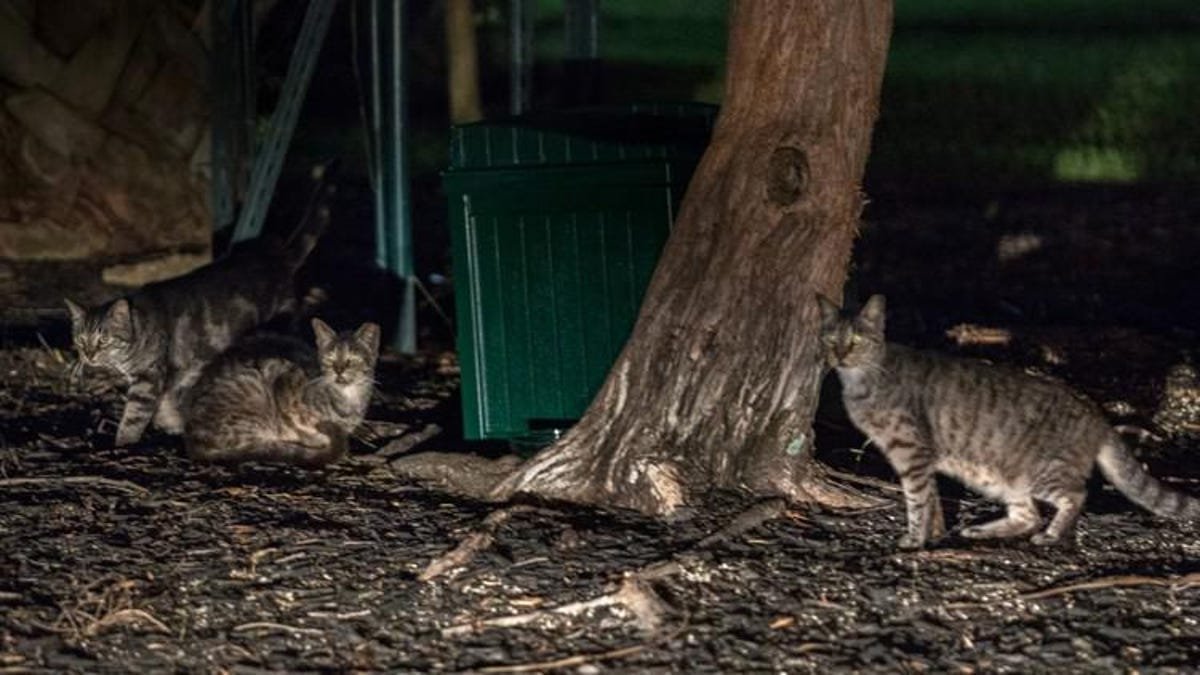
Palm Beach has a long history with feral cats. Lore has it that the island’s roaming cat population dates to railroad-and-hotel magnate Henry M. Flagler’s time in the late 1800s, when the animals were brought to the island to help control the number of rodents.
Those days are long gone, but the cats remain, a remnant of history that continues to affect life in Palm Beach today. Efforts over decades to rid the town of feral cats have proven fruitless.
But as the Town Council learned at its Feb. 10 meeting, the cat population has grown substantially in the last year — up 60%, from 372 in 2024 to 604 in 2025. That’s according to the report delivered by longtime resident David Leavitt.
He’s the president of Palm Beach Island Cats, the town-sanctioned, nonprofit group that cares for the animals by maintaining late-night feeding stations on town-owned property as well as on private land where owners have given their permission. The group also arranged to have the cats vaccinated and spayed or neutered.
Leavitt attributes much of the feline-population growth to people from off the island who bring cats to the island and drop them off, often aware that they will be cared for by the volunteers of Palm Beach Island Cats.
Many would see the cat population as a public-safety issue that should be handled by Town Hall or other government agencies. After all, unvaccinated feral cat populations left on their own can spread disease and even pose threats to people and household pets. And that’s on top of the quality-of-life issues that accompany hungry animals who live in densely populated areas.
Palm Beach officials and residents are fortunate, then, that they can rely on Leavitt’s group for its stalwart and compassionate efforts regarding the animals. The nonprofit organization relies on about 22 volunteers who feed, monitor and humanely trap — and later return — cats that need health care, vaccinations or sterilization.
Longtime residents may remember the controversy years ago when a couple of volunteer groups competed fiercely over caring for the cats, including accusations of neglect and improper feeding.
Those days also are gone. Palm Beach Island Cats is today the sole town-recognized provider of services and has proved that it is up to the task.
But its work takes money, collected through donations. Leavitt makes no bones about the need for more private funding. The town provides a token grant of $100 each year to the organization.
In a town that is home to at least 70 billionaires — and hundreds of millionaires — making a gift to the group should be a no-brainer.
The organization would like more volunteers, although Leavitt acknowledges that getting people to commit to late-night feeding schedules can be tough. The town also needs more feeding stations, Leavitt said in his report.
And as far as the burgeoning cat population goes, Town Manager Kirk Blouin told the Town Council that the town could create an ordinance or enforce an existing one to help discourage people from abandoning cats in Palm Beach.
Leavitt, in turn, noted that cats abandoned on Palm Beach are often “trap shy,” making it difficult to catch them to get them vaccinated.
In any event, as time has proven, the island’s cat colonies are not going away. But as Blouin’s suggestion shows, Town Hall may have options to help control the number of cats that make their home here.
And residents, too, can do more by donating to Palm Beach Island Cats so that it can continue to provide its critical services to the town.
To make a donation to the organization or learn about volunteer opportunities, call 561-512-4884 or visit PBIslandCats.org.